Technology
Aeronautics /
Europe
After the Concorde ...
Is there a new supersonic plane coming?
José PEDRO Magalhães Ramos
8/3/2020
UK-based technology company Virgin Galactic, already known to the general public for its efforts to popularize space travel for tourism, reported major advances in the development of its program to bring supersonic civilian flights back.
The proposal is to build an airplane capable of crossing the incredible mach 3.0. To give you an idea of "u200b"u200bwhat this represents, the legendary Concorde, one of the most iconic planes in history, which ended its career early in 2003, crossed mach 2 "only".
The difference in concepts, however, is huge. The Concorde intended to be a classic airliner, with a capacity for more than 100 passengers, suitable for its design time, intended to be the next big step in the progress of commercial aviation, which had just evolved from propeller planes capable of something around 550 km / h for the jet era, with about 900 km / h and now with the Concorde it aimed to bring to the masses a speed of 2200 km / h - routinely.
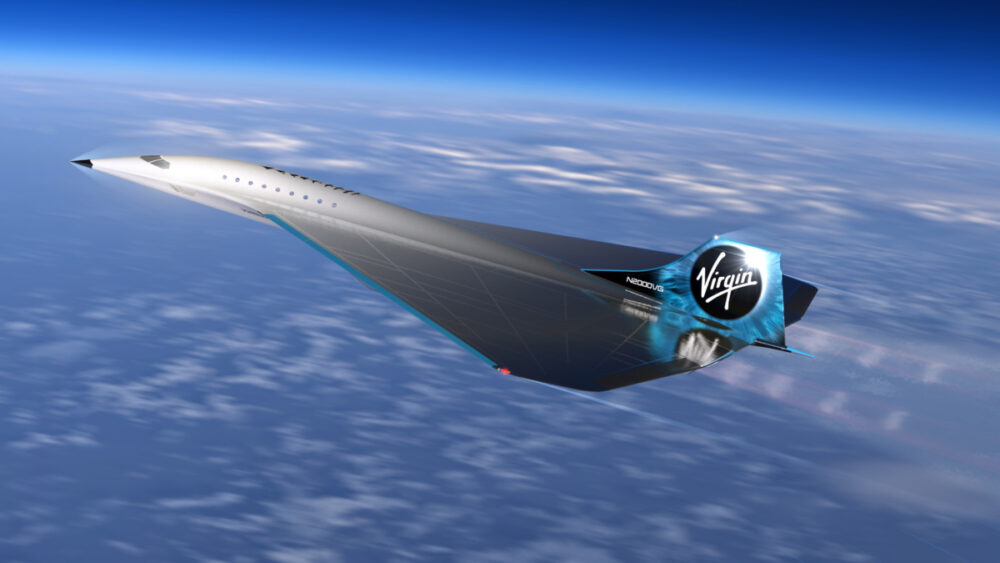
In opposition to this, Virgin Galactic's new concept targets a ship for up to 19 passengers.
The tiny capacity of the ship, unfortunately, seems to reveal a sad reality of our times: the concentration of wealth, income and power in the hands of a few, since a 19-passenger ship will not be available to practically anyone except those few usually made to the consumption of extremely high and exclusive luxury, something that, let's face it, does not seem in the least aligned with the needs of the human race, including the environment.
Anyway, who knows, maybe bring at least one new technology development channel so that one day you can once again dream of supersonic aircraft for the masses, as the Concorde was once, unfortunately made impossible by the end of cheap oil products at the beginning of 70s of the last century.
Although it is a recognized technological and innovative company, Virgin Galactic is not alone in the project and has the British Rolls Royce as a strong ally.
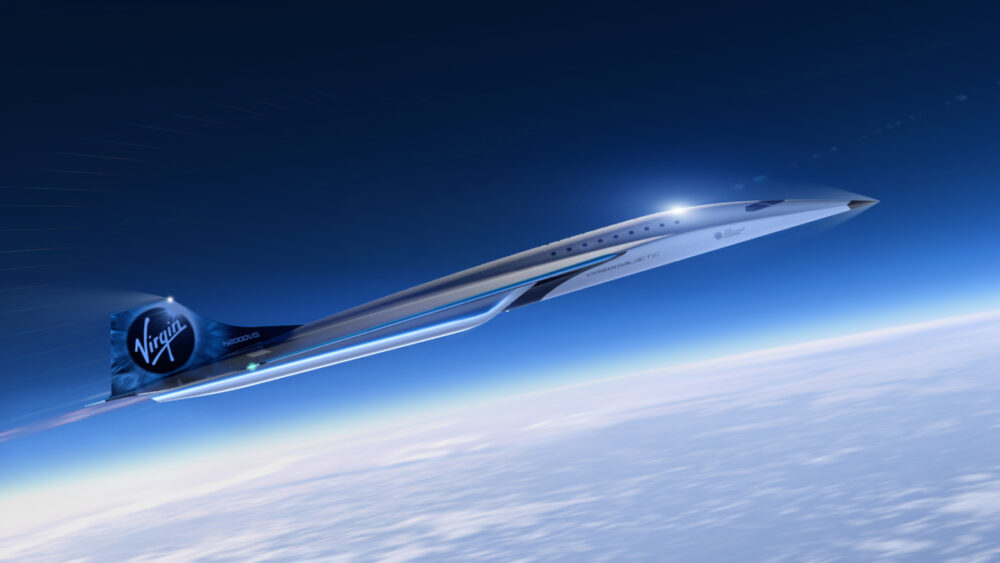
The British will be in charge of developing the new ship's propulsion technology. This company's previous experience in the development of these technologies is proven, after all it was the company that developed the Olimpus 593 engines used in the Concorde.
It is an incredibly versatile, reliable and robust engine - or it could not have been used on an airplane capable of flying for 4 hours at mach 2.05 - originating from a project originating from Bristol Aerospace that was used in a wide variety of aircraft, but also in industrial applications, thermoelectric and even naval plants. For example, the British aircraft carrier HMS Invincible that fought in the Malvinas / Falklands war used 4 of these engines, as did the Concorde. The Niterói class Brazilian navy frigates were also equipped with 2 of these engines.
Despite the elitism it is clear that it is a passionate concept and will possibly face immense challenges to be implemented. Just remember what the challenges were for the creation of the SR-71 by Lockheed Martin (USA) or the MIG-25 (former Soviet Union), planes capable of Mach 3 and which required the development of very specific technologies to achieve this objective.
Good luck to Virgin Galactic!
Credit images: Virgin Galactic (publicity)


Hyperlinks:
...
...
...
 José PEDRO Magalhães Ramos
He is a professional with almost four decades of experience in aviation. Having worked at Rio Sul and TAM in the 1980s and in the 1990's, joined Vasp where he spent 10 years in the Engineering area. He then created and operated the website www.aerospace.com.br for 4 years, now extinct and in 2004 he joined Gol, having stayed until 2017 and passed in various technical and business areas. Currently as a technical consultant still-and always-in the aviation area, he dedicates his private time to create and operate this our portal!
   
|