Technology
Aeronautics /
USA
Powerful batteries
New NASA technology promises longer usage time and longer durability
Electravia BL1E Electra, primeiro avião elétrico registrado
Por Anubis2202 - Obra do próprio, CC BY-SA 3.0, via Wikimedia Commons
Rafael Ramos
5/9/2021
Battery technologies have evolved a lot since the first of nickel-cadmium and others of heavy metals. Today, we use lithium-ion batteries that are much more durable, reliable and have greater autonomy. Even so, the devices seem to evolve more than the capacity of the batteries. Everyone has gone through situations in which they were frustrated with the battery life, be it a cell phone, a tablet, notebook or even a car.
With that in mind, researchers from all over the world are trying to get more advanced technologies as a source of energy. NASA, a pioneer in the development of new technologies, is at the forefront of the most improved battery design: the SABERS project (Solid-state Architecture Batteries for Enhanced Rechargeability and Safety) ).
Another application of super-powerful electric batteries would be in aviation, and that's where NASA aims. The goal is to create a battery with a much greater energy storage capacity than current lithium ions and that do not lose capacity over time. Another advantage would be the fact that these batteries could be more resistant to mechanical impacts, temperature or pressure changes.
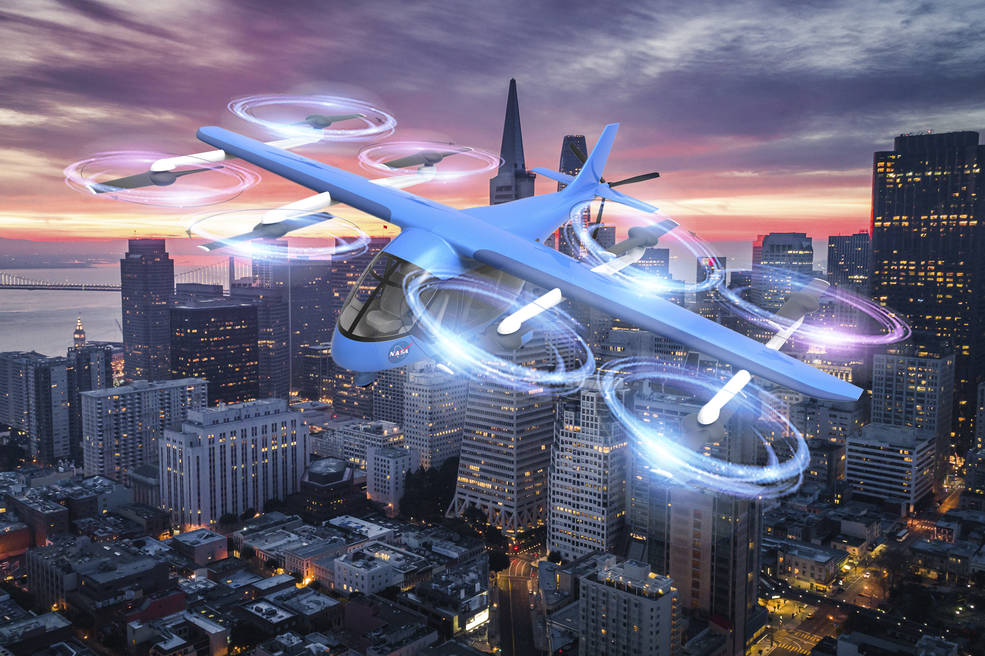
Drone elétrico
Divulgação/NASA
Current batteries have the characteristic that, in general, they use liquids in their composition, which causes that, with time, they lose functionality, leak or deform. NASA's proposal is for a totally solid battery that would avoid these undesirable changes due to the properties of the water.
Fully solid batteries have the characteristic of having a lower discharge rate. SABERS researchers have further increased this feature, so that these batteries could be used in even larger electronics.
One of the possibilities found by the project would be to combine sulfur and selenium to accumulate the electric charge. This solid shape could store more energy when compared to current lithium ions, not heat up and ignite. It would also have the advantage of being smaller and, since these elements are relatively simple to obtain, they could have a lower cost.
Características do projeto SABERS
Divulgação/NASA
Other materials could generate an interesting combination. Another material researched for this purpose is called holey graphene, a nanomaterial composed of carbon in which the atoms bond to form hexagonal structures. This chemical conformation provides greater resistance to the material, greater malleability and less thickness. In addition, this structure has high electrical conductivity.
Using all the researched improvements, a relatively small battery would be able to provide a lot of power. For example, if a conventional lithium-ion airplane battery needed 8 cubic meters in size to store all the energy with the desired autonomy, a solid battery of 4 cubic meters, or even smaller, would do it. This type of technology could reduce the weight, size and increase the autonomy of electric aircraft.
NASA in the SABERS project, focused on five main points: safety, energy density, discharge rate, design and scalability. Batteries must be easy and inexpensive to produce. Otherwise, your production would make no sense.
The project, which started on October 1, 2019, was expected to last two years, but the coronavirus pandemic may delay that prediction.
NASA data
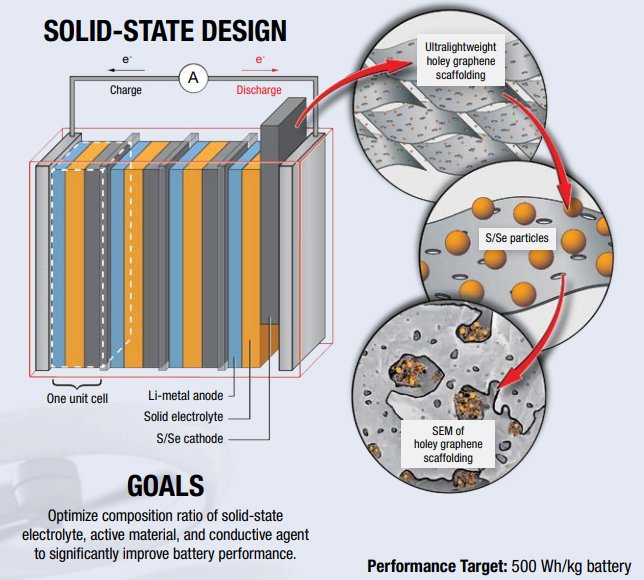
Características do projeto SABERS
Divulgação/NASA
Hyperlinks:
...
...
...
 Rafael Ramos
Aviation enthusiast from an early age, he had his first contacts with the area developing that good old habit of spending dozens of hours in front of the screens of Micrsoft Flight Simulator and other simulators. With a solid background in various technological areas, including engineering and chemistry, Rafael has rejoined aviation as editor and author of articles and materials on our portal, providing invaluable help to the dynamics and expansion of the website and the aeronautical community, bringing us the news and updates so indispensable for us to remain current in our area of operation.
   
|