Aviation
Commercial /
Europe
Air France 447
Worst company accident will be brought back to court
Aibus A330
Air France
Aldo Bidini (GFDL 1.2), via Wikimedia Commons
Rafael Ramos
5/15/2021
In 2009, the 216 passengers and 12 crew members of a flight departing Rio de Janeiro bound for Paris died when the aircraft crashed in the Atlantic Ocean.
In 2019, the case was suspended and investigations of the case were closed. However, last Wednesday, May 12, the Paris Court of Appeal invalidated that decision, when it determined that Air France and Airbus be prosecuted for “wrongful death”, for having indirect responsibility in the accident. The decision stemmed from appeals by the Attorney General's Office and the victims' families.
François Saint-Pierre, a lawyer for Air France, claimed that the company "denies having committed a crime" that caused the accident. Airbus lawyers say this is an "unjustified decision" and will appeal to the Supreme Court.
In contrast, the relatives of the victims feel relieved, although they regret the delay in the decision. Danièle Lamy, president of the Entraide et Solidarité AF447 association said: “it is a great satisfaction to feel that I have finally been heard by the justice”.
The accident occurred on June 1, 2009, when an Airbus A330 flying from Rio de Janeiro to Paris crashed in the Atlantic Ocean, leaving 228 dead, including passengers and crew, and no survivors.
Ten years after the accident and a series of legal fights, the Paris Prosecutor's Office, leaving Airbus aside, requested a trial against Air France, arguing that the company would have been "negligent and reckless" in relation to pilot training. However, the judges did not comply with this recommendation and determined the suspension of the process, claiming that the cause of the accident was "a combination of elements that had never occurred and, therefore, revealed dangers never before perceived". The investigations would not have identified Airbus or Air France failures related to piloting errors as the cause of the accident.
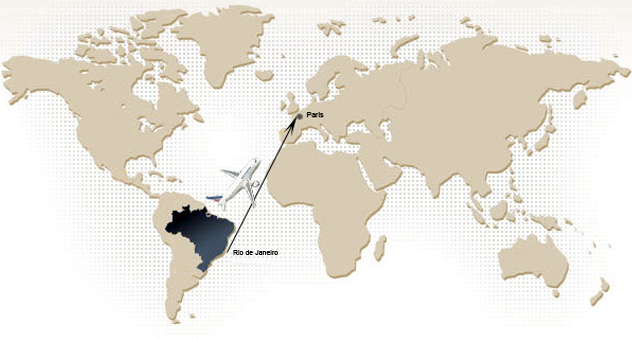
Trajetória planejada para o voo AF-447
Agência Brasil/ABr, CC BY 3.0 BR, via Wikimedia Commons
UNDERSTAND THE ACCIDENT
The plane was undergoing a storm cloud formation of the type known to meteorologists as CB (Cumulus Nimbus) from which the pilots did not deviate.
These bad weather cloud formations are common in tropical / equatorial regions and are formed by the meeting of the great atmospheric circulation in the northern hemisphere with the great circulation in the southern hemisphere. In this line of encounter between the southern half of the Earth's atmosphere and the northern half, there is a strong tendency to the appearance of convective currents (vertical) that generate condensation of water and ice inside, strong turbulence, hail, lightning, wind-shear, micro-burst, and all sorts of associated atmospheric phenomena.
For the reader to get a sense of what this looks like, think for a minute about those very strong late afternoon storms, common in Brazil in the months of February and March, often causing flooding, tree falls and other disturbances ("They are the waters March, closing the summer ... ").
In this condition, descending and ascending air currents are very common, sometimes close to each other, which makes the flight even more difficult mainly due to strong turbulence, risk of hail at certain altitudes and ice formation. Under these conditions, it is always recommended that crews try to avoid problematic atmospheric formations using onboard weather radar data or other available information. But the flight continued normally.
The pilots then heard noises of small ice collisions with the plane, so one of the three pilots turned on the engine's anti-icing system to ensure that nothing bad happened. Another pilot suggested turning on the ignition system of the engines, showing unpreparedness to take on that situation.
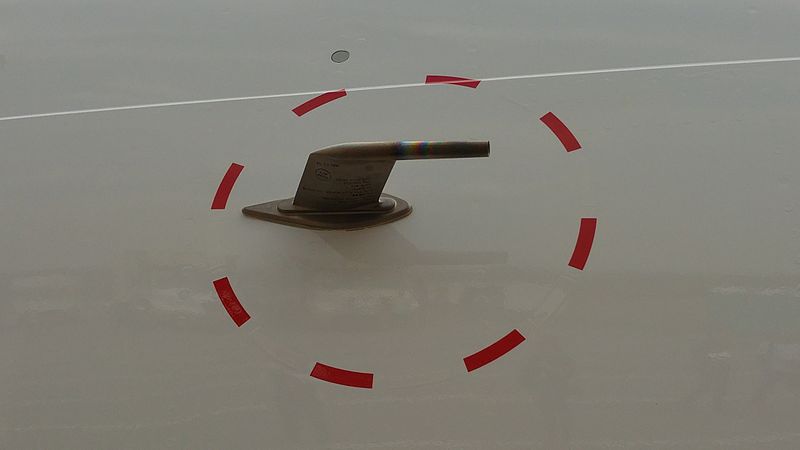
Tubo de pitot
geralmente colocado sob a asa do avião
However, as this very rare atmospheric condition for the flight was present and the pitot tubes of that plane were susceptible to ice blockage in this rare and specific condition, the three pitot tubes were blocked at the same time, so the autopilot was left without parameters airspeed and disengaged, leaving the plane in visual flight.
In this condition, the ideal would be not to touch the power levers or the angle of the plane's nose. However, the pilot pulled the sidestick backwards, causing the plane to rise above the maximum altitude for its weight.
As the plane climbed, it lost speed. Thus, it stalled, but the pilot did not relieve the sidestick, which caused the aircraft to lose altitude quickly, but with its nose still pointed upwards. At that moment, two of the pitot tubes started working again, but the pilot did not read the information correctly, since one of the tubes was still clogged. Thus, when the pilot saw the plane losing altitude, he changed the throttles to the maximum, making the situation even worse, since high-powered engines tend to lift the nose of the plane even more.
As the engine was generating more thrust, the nose of the plane went up and the lift was further impaired, but no one feels anything. The plane crashed to the order of 3,000 meters per minute.
When the pilots managed to lower the plane's nose and increase the speed, the stall alarm sounded again and the sidestick was pulled back again, but it was too late.
The Airbus crashed into the water with its wings almost level, with its nose tilted upward at 15 ° and a forward speed of just 107 knots.
The Attorney General's office considered that the indirect causes of the accident are the responsibility of both companies. Air France officials, the Prosecutor's Office said, "did not provide the necessary training and information for the crews" while "Airbus underestimated the severity of the Pitot speed probe failures" and did not do enough to correct them.
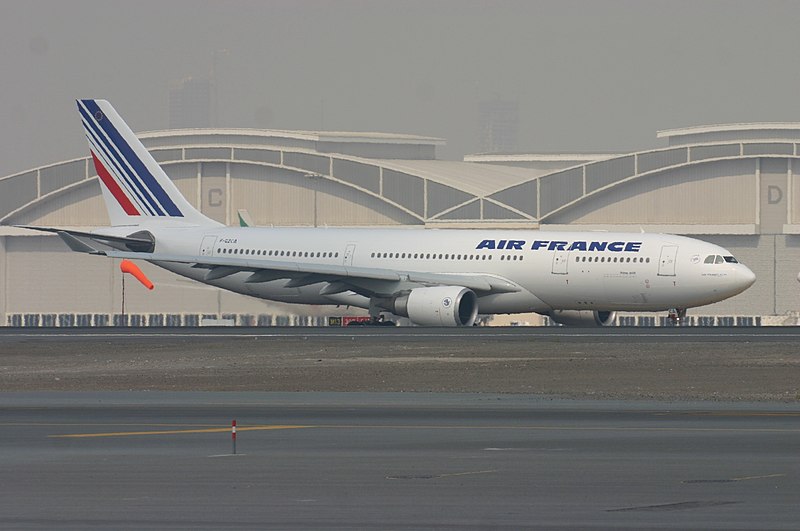
Airbus A330 da Air France
Airwim, GFDL, via Wikimedia Commons
Hyperlinks:
...
...
...
 Rafael Ramos
Aviation enthusiast from an early age, he had his first contacts with the area developing that good old habit of spending dozens of hours in front of the screens of Micrsoft Flight Simulator and other simulators. With a solid background in various technological areas, including engineering and chemistry, Rafael has rejoined aviation as editor and author of articles and materials on our portal, providing invaluable help to the dynamics and expansion of the website and the aeronautical community, bringing us the news and updates so indispensable for us to remain current in our area of operation.
   
|