Aviation
Commercial /
Europe
ZEROe
Airbus develops hydrogen fuel tanks in its zero-emissions center
Divulgação/Airbus
Gabriela Ramos
6/18/2021
Airbus will create in Germany, in Bremen, and in France, in Nantes, Zero Emission Development Centers (ZEDC), dedicating efforts to a complementary project aimed at the metallic area of "u200b"u200bhydrogen tanks.
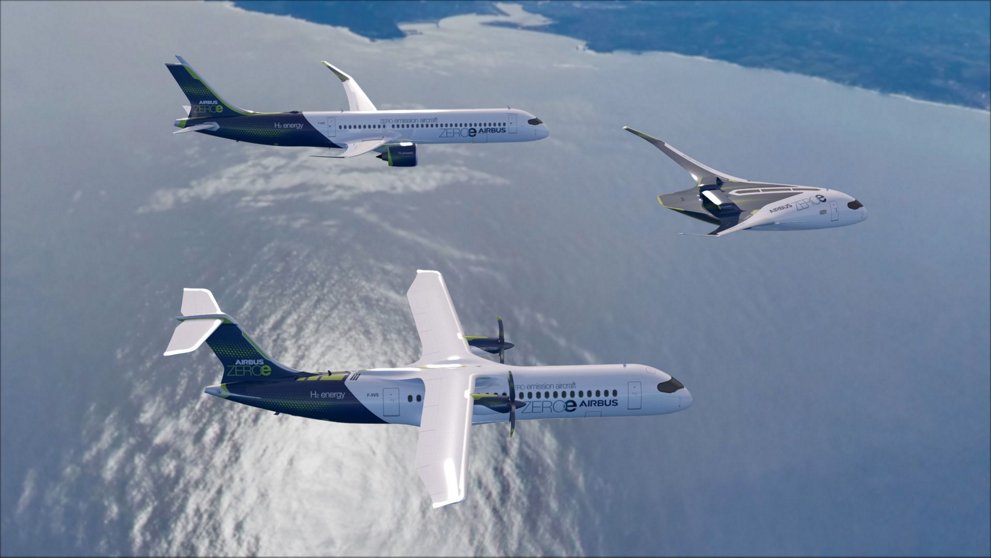
In doing so, the company seeks to achieve competitive costs in the manufacture of cryogenic tanks to support the future launch of ZEROe, accelerating the development of hydrogen propulsion technologies. The design and integration of the tank structures will be important pillars for the performance of a future hydrogen aircraft.
The ZEDC are expected to become operational in 2023, to build LH2 (liquid hydrogen) tanks, and the first test flight is scheduled for 2025.
Bremen was chosen to host one of the centers due to its well-known track record of experience in LH2. In central Germany, ZEDC will initially focus on system installation and cryogenic testing of the tanks. This center will also feature ECOMAT, the Center for Eco-Efficient Materials and Technologies, which will provide a broader hydrogen research ecosystem.
Nantes was chosen for its expertise in metal structure technologies related to the central wing box. In Nantes, ZEDC will also manage a wide range of composite and integration technologies as well as metal-related technologies. In addition, Nantes will also be able to offer an experience in codesign activities in areas such as nacelle entrances, radomes and others related to the fuselage. The Nantes ZEDC will draw on the skills of the Nantes Technocentre, supported by the IRT Jules Verne, with an innovative local ecosystem.
In Germany, Airbus will promote collaboration across different sectors to support the overall transition to hydrogen propulsion.
The tank is an important safety component, and to support it very specific systems engineering is required. LH2 presents a greater challenge compared to kerosene because to liquefy it needs to be stored at -250 degrees Celsius, and it needs to liquefy to increase density. Therefore, the challenge will be to develop a component that can withstand the repeated thermal and pressure cycles that the aircraft requires.
It is expected that, in the short term, LH2 tanks for commercial aircraft will be metallic, but there is the possibility of using carbon fiber reinforced polymer, due to its high performance potential.
Divulgação/Airbus
Hyperlinks:
...
...
...
 Gabriela Ramos
Gabriela is the latest addition to the editorial team of our website, having provided us with her solid background in editing, publishing and photography, and her interest and training in aviation history and historiography. His good taste and common sense and great cleverness and sagacity in the selection of themes and materials greatly enriched our vocabulary and narrative style. Gabriela brought unusual predicates and came to stay, helping to point the way of success of our portal.
   
|
|