Technology
Aeronautics /
Europe
Deadly contrails!
Condensation trails left by planes have a devastating impact on the climate, see what science is doing to solve this
DC8 da NASA analisando as emissões do Airus A320
Reprodução/DLR
Rafael Ramos
6/24/2021
In a study published in the scientific journal Nature, researchers found a way to reduce the environmental impact caused by aviation. The study by the German Aerospace Center in partnership with NASA shows that the fuels used today cause a great environmental impact.
Incomplete burning of fuels generates particulate matter and undesirable by-products. There is also the formation of ice crystals. The released particles favor the condensation of water and the formation of ice. For example, each kilogram of fuel burned releases another 3.16 kg of carbon dioxide (CO2) and 1.23 kg of water vapor (H2O).
This phenomenon forms “white smoke” in the sky behind the plane and is known as contrail cirrus. According to experts, this effect contributes more to global warming than carbon dioxide and nitric oxide emissions. The incomplete combustion of the soot precursor aromatic particles prevents the Earth's infrared radiation from dissipating into the atmosphere.
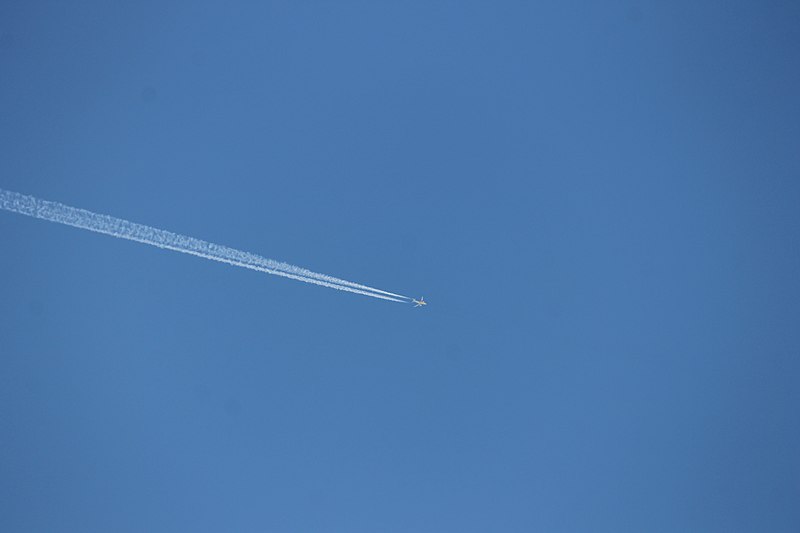
"The clouds known as contrail cirrus have a greater impact on the planet's climate than all the carbon dioxide emissions accumulated in the atmosphere over the last 100 years", says the director of the Department of Atmospheric Physics at the DLR, Hans Schlager, co-author of the study.
The researchers say that both emissions and contrail cirrus can be reduced by up to 70% using a blend of fuels, rather than the fuel that is now used by almost every airline in the world.
The researchers used an Airbus A320 to measure emissions with five different fuel types with different amounts of sustainable fuel in the mix.

In the biofuel blends, the researchers found less particulate matter and larger ice crystals, which generated much less warming in the atmosphere.
The study shows that using a blend of SAF (Sustainable Aviation Fuel) can greatly reduce the environmental problems posed by aviation.
“Our results pave the way for the creation of an advanced jet fuel that can reduce environmental impacts. It is a new approach, which proposes the use of biofuels to fight global warming and all the problems that arise from the burning of fossil fuels”, concludes Christiane Voigt.
Check the full study on the external link below.
Hyperlinks:
https://www.nature.com/article...
...
...
 Rafael Ramos
Aviation enthusiast from an early age, he had his first contacts with the area developing that good old habit of spending dozens of hours in front of the screens of Micrsoft Flight Simulator and other simulators. With a solid background in various technological areas, including engineering and chemistry, Rafael has rejoined aviation as editor and author of articles and materials on our portal, providing invaluable help to the dynamics and expansion of the website and the aeronautical community, bringing us the news and updates so indispensable for us to remain current in our area of operation.
   
|