Aviation
Military /
USA
Red Flag
For the first time, the F-35A is playing the role of aggressor in exercises
F-35
U.S. Air Force photo by Master Sgt. Donald R. Allen, Public domain, via Wikimedia Commons
Gabriela Ramos
8/8/2021
With the Red Flag 21-3 exercise underway at Nellis Air Force Base, the F-22 Raptor and F-35 Lightning II have been flying as adversaries and the latter has been playing the role of aggressor for the first time, according to Tech article. Sgt. Robert Hicks, Joint Base Langley-Eustis. Red Flag includes expanded airspace, an advanced surface-to-air threat, and leading-edge air-to-air threats, and with fighters acting in this way, the exercise is intended to create a greater challenge for the Joint Force.
Lt. Col. Evan Parr, director of operations for the 27th Fighter Squadron, said: “Training in this environment is very beneficial to our team. When we train at home, we fight a mix of F-22s and T-38 Talons as our opponents. Here, we can train against various high-end threats together with the F-16s of the 64th Aggressor Squadron (AGRS), whose main mission is to study our opponents' maneuvers and techniques and use them against us.”
The 64th AGRS Airmen goes through a certification process to gain a comprehensive understanding of the US adversaries and their tactics. This preparation ensures that, on testing, attackers can pose a challenging and realistic threat to maximize training.
“We are subject matter experts when it comes to our enemy air forces,” said Lt. Col. Chris Finkenstadt, commander of the 64th AGRS. “Based on our focus on high-powered competition, we need to make sure the blue air is ready, and we do that by presenting the best possible atmosphere we can.”
Additionally, alongside the 64th AGRS, the 414th Combat Training Squadron also helps make air-to-ground employment more challenging with complex target areas and cloaking and concealment techniques.
Parr says that “Red Flag's goal is to challenge, disrupt and, if possible, deny our communication and interoperability. They force mistakes and punish mistakes. We get better working with these issues in the air and as we evaluate each fight.”
The performance of the F-35 as an aggressor could be the first step towards the reactivation of the 65th AGRS, which had been deactivated in September 2014 and previously flew with F-15 Eagle aircraft. Reactivation is already underway, and in addition to reactivation, the USAF is also moving 11 F-35A Lightning IIs to Nellis as part of a larger initiative to improve training fifth-generation fighters.
This action came as a consequence of the recommendation of General Mike Holmes, former commander of Air Combat Command, who suggested improving training in order to develop fifth-generation fighter tactics and close air support, adding the F-35 to complement the fourth-generation aircraft currently in use.
The USAF then decided to create a fifth-generation Aggressor Squadron at Nellis Air Force Base and transfer nine non-combat F-35A from Eglin Air Base there, which will only be transferred after the newly produced aircraft reach the base. Air from Eglin to replace them. The new aircraft are expected to arrive at Nellis Air Force Base in 2022.
In addition, two F-35A aircraft will also be transferred from Edwards Air Force Base to Nellis Air Force Base, to form part of the 24th Tactical Air Support Squadron (TASS). The main function of TASS is to carry out close air support training. Edwards' transfer to Nellis will allow additional training for the F-35A.
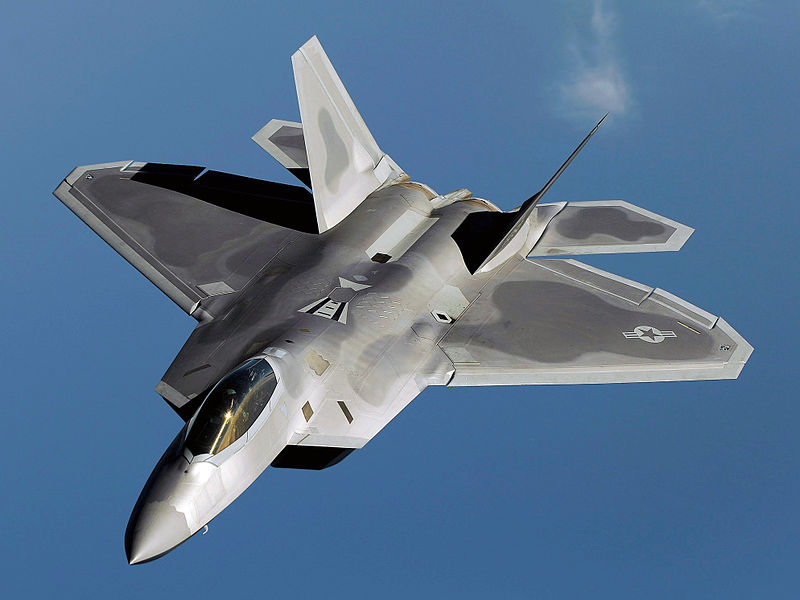
F-22A
F-22_Raptor.JPG: Master Sgt. Andy Dunaway, Public domain, via Wikimedia Commons
Hyperlinks:
...
...
...
 Gabriela Ramos
Gabriela is the latest addition to the editorial team of our website, having provided us with her solid background in editing, publishing and photography, and her interest and training in aviation history and historiography. His good taste and common sense and great cleverness and sagacity in the selection of themes and materials greatly enriched our vocabulary and narrative style. Gabriela brought unusual predicates and came to stay, helping to point the way of success of our portal.
   
|