Technology
Aeronautics /
Brazil
Energy
Focused on sustainability, Embraer presents 4 new aircraft and news
Embraer Energia Hybrid
Image: Embraer
Rafael Ramos
11/9/2021
Working on the proposal to decarbonise aviation until 2050, Embraer presented, on Monday, 8, four new aircraft of the Family called Energy.
The technical and commercial feasibility is being analyzed. Embraer says the technologies may be available from 2030 onwards.
Embraer Energia Eletric
Image: Embraer
Hybrid Energy (E9-HE) is an aircraft with hybrid-electric propulsion that reduces up to 90% of carbon emissions. It is a small/medium sized plane, with 9 seats and rear-mounted engines.
Embraer Energia H2 Fuel Cell Gas Turbine
Image: Embraer
Energia Eletric (E9-FE) is a counter-rotating propeller aircraft (the second propeller rotates in the opposite direction of the first), with all electric propulsion. The plane is small/medium sized, with 9 seats and zero CO2 emissions. This technology should be available in 2035.
Energy Fuel Cell Gas Turbine (E19-H2FC) is an aircraft with electric hydrogen propulsion and zero CO2 emissions. Its size is bigger than the last two (19 seats), with its electric motors mounted in the rear. Must have the technology available in 2035.
Energia Gas Turbine (E50H2GT) is the largest aircraft in the family, with 35 to 50 seats and powered by hydrogen or SAF. CO2 reduction can be up to 100%. Your technology should be available in 2040.
The company announced new developments for its existing jets, the E-jets E2. The company is studying the possibility of operating the jets with hydrogen, contributing to the decarbonization of the sector. Thus, until 2030 the jets of the E2 family would use the SAF. As early as 2050, they could use hydrogen. However, they would need new engines.
The new TPG-90 turboprop should use sustainable kerosene as early as 2025, with hydrogen propulsion in 2045.
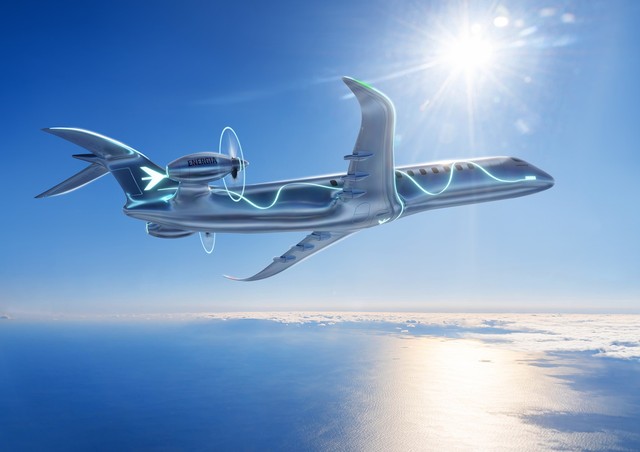
EmbraerGas Turbine
Image: Embraer
Sustentability Plans
Embraer
Image: Embraer
Hyperlinks:
...
...
...
 Rafael Ramos
Aviation enthusiast from an early age, he had his first contacts with the area developing that good old habit of spending dozens of hours in front of the screens of Micrsoft Flight Simulator and other simulators. With a solid background in various technological areas, including engineering and chemistry, Rafael has rejoined aviation as editor and author of articles and materials on our portal, providing invaluable help to the dynamics and expansion of the website and the aeronautical community, bringing us the news and updates so indispensable for us to remain current in our area of operation.
   
|