Aviation
Military /
USA
Update
Boeing to install electronic warfare system on F-15 fighter jets
F-15E
Image: Boeing
Rafael Ramos
7/25/2022
Boeing announced on July 21 that the US Air Force's first two F-15Es have begun to undergo modifications to receive the Eagle Passive Active Warning and Survivability System (EPAWSS), a system that is expected to help combat ground and air threats, as well as improving battlefield situational awareness.
The new system should greatly improve the survival rate of the fighter that is already one of the best in the US in air-to-air (dogfight) combat.
In the modernization effort, 43 units of the F-15Es will receive the EPAWSS” as part of the first low-rate production batch.
Signed in March 2021, the agreement between Boeing and BAE Systems made it possible to produce the new system, which should also equip the new F-15EX Eagle II by default. A new contract of the type is due this year, with full rate production starting in 2023.
Initially, the Air Force wanted to equip up to 217 F-15Es with the EPAWSS, but initial operational capability is not expected to be achieved until 2025.
The EPAWSS will replace the Tactical Electronic Warfare System self-protection kit manufactured by Northrop Grumman for the F-15. This system is considered obsolete and expensive to maintain.
ABOUT EPAWSS
According to information from the Air Force, the system makes use of modern computing technologies, which provide the pilot with better information in order to take appropriate measures in each situation. Boeing called the system a "transformative review of the F-15's survivability".
In addition to the radar identifying the enemy, the idea is that it can also deceive them about the precise location of the F-15. For Prat Kumar, Boeing's vice president for F-15 programs, the system "further strengthens a competent and lethal aircraft."
The system, in addition to being more reliable, requires less maintenance than the previous one. EPAWSS can also be updated as it is fully digitized.
The system came to ensure the viability of the F-15 after 2040.
However, the Government Accountability Office (GAO) recently revealed in a report that testing challenges pose the risk of delays such as “lower system performance in dense background frequency environments and with threat radar direction detection” .
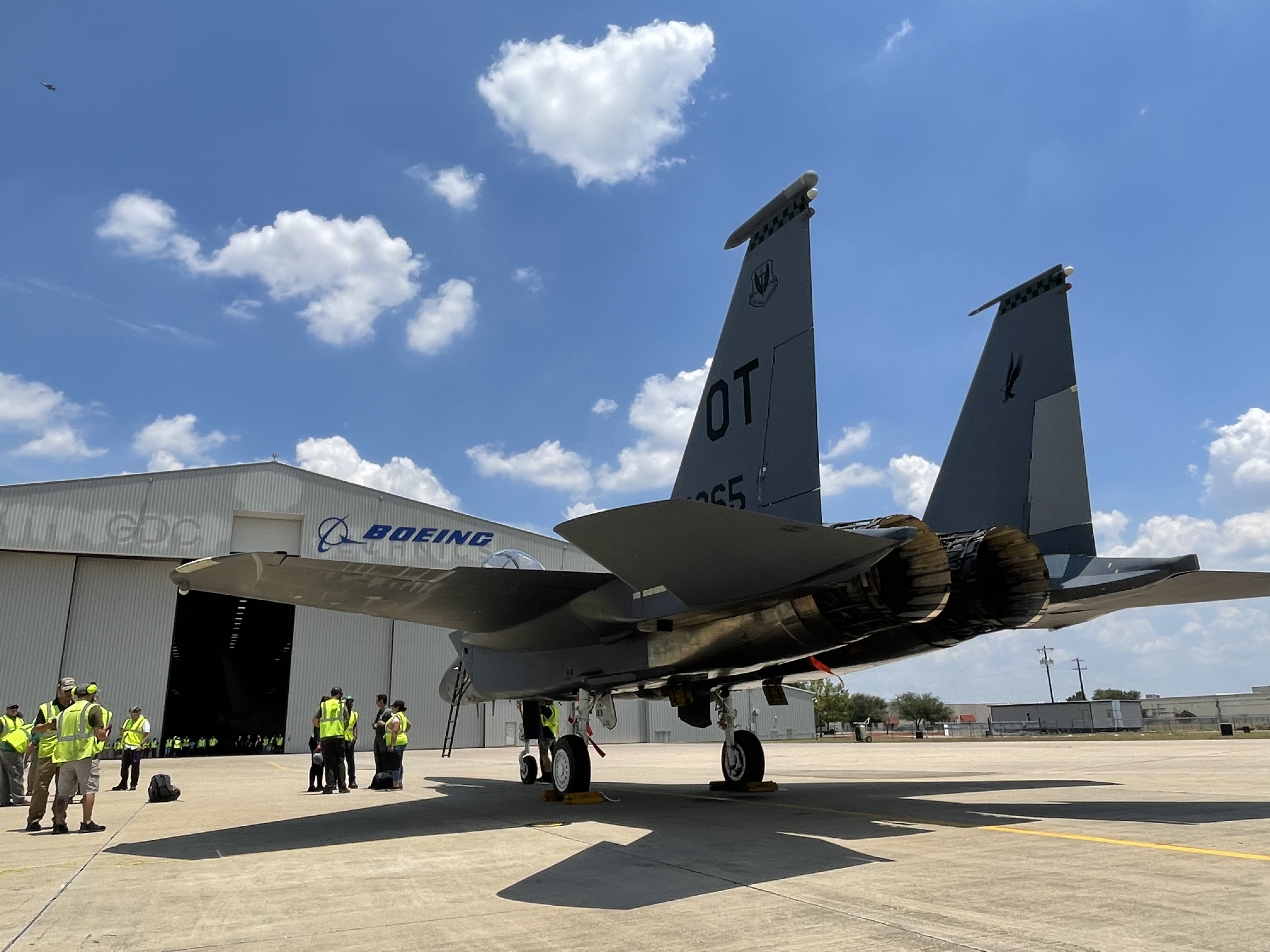
F-15E
Image: Boeing
Hyperlinks:
...
...
...
 Rafael Ramos
Aviation enthusiast from an early age, he had his first contacts with the area developing that good old habit of spending dozens of hours in front of the screens of Micrsoft Flight Simulator and other simulators. With a solid background in various technological areas, including engineering and chemistry, Rafael has rejoined aviation as editor and author of articles and materials on our portal, providing invaluable help to the dynamics and expansion of the website and the aeronautical community, bringing us the news and updates so indispensable for us to remain current in our area of operation.
   
|
|