Aviation
Military /
Asia
Military Mega Sale
Japan to receive strong aerial reinforcement
José PEDRO Magalhães Ramos
7/12/2020
Japan and the United States are reaching an agreement for a huge sale of fighter jets to the armed forces of this Asian country.
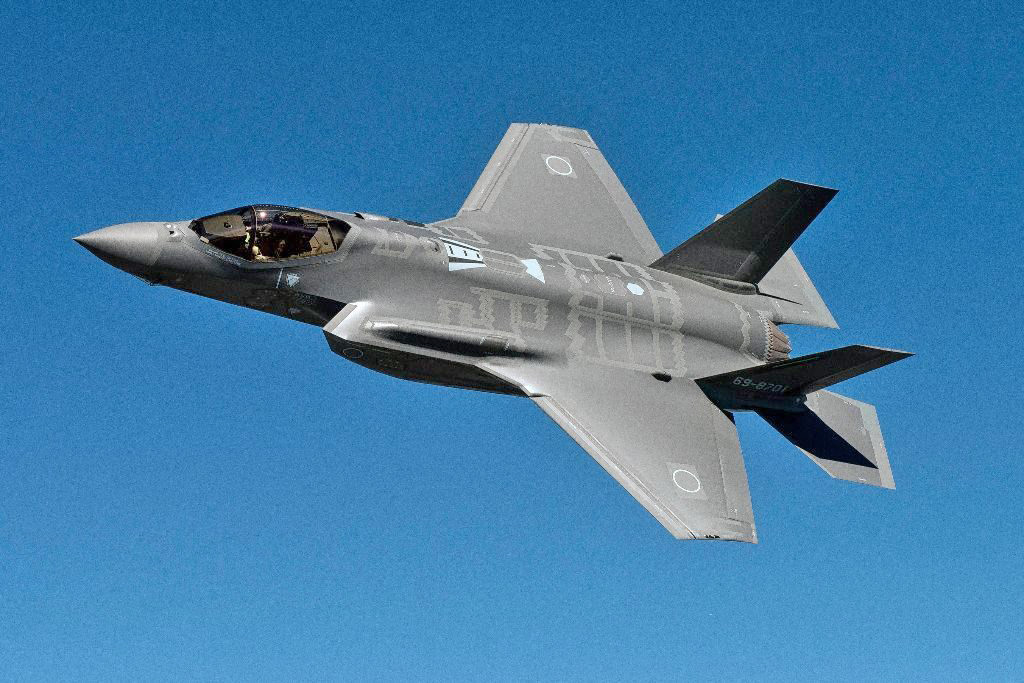
The package provides for no less than the supply of 105 Lockheed Martin F-35 fighters, 63 of which are model "A", for appropriate use by air forces and 42 of model "B", which is more suitable for use by naval forces, such as navy or marines.
The differences between the two versions are great. The "B" version has a large fan in front of the engine, which serves to generate support for vertical / short takeoff or landing operations. A gate opens above the fan to allow air to enter during stol / vtol operations. Its weight is greater and the wing area too, to support the greatest weight.
The landing gear and structure in general is further strengthened to support operation on aircraft carrier decks. This model, however, has one of the most severe limitations imposed on the model and discovered late, attributable to design errors: the airplane cannot sustain supersonic speeds except for very short periods and yet in very modest mach numbers.
One thing is very clear, the military escalation in Asia, encouraged, certainly, by the growing rivalry between the United States and China, which seems to be taking the countries allied to the USA to a level of militarization that is considerably increasing. The fact that, in December 2018, Japan announced the construction of two aircraft carriers, a fact that had not occurred since the Second World War, is in line with the announced sale of F-35B fighters that lend themselves precisely to this type of use.
The total value of the transaction amounts to an astronomical $ 23 billion, including no less than 110 F135 engines and support for transfers, among other treats.
The entry into service is expected to cause the retirement of the venerable F-4s still operated by the Japanese armed forces, but also of the first batches of F-15, an aircraft from which the country operates about 200 units.
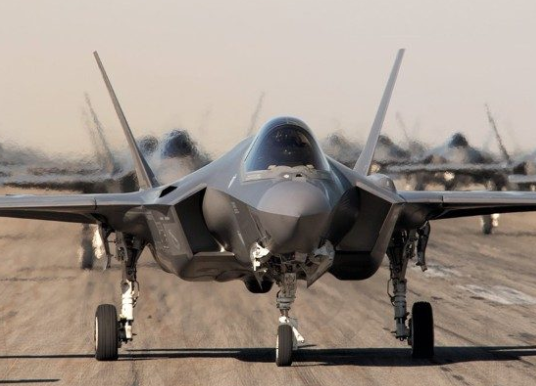
It is speculated that the F-15 will have to remain in service and be modernized to face a long time of service as the fighter, although less modern than the F-35, is far superior in performance and in classic aerial combat capability, the called dogfight. Pentagon sources say the F-35 dispenses with supersonic speeds and will never face dogfights as its immense BVR combat capability will beat any opponent before the scenario evolves into WVR.
Well ... Russia and China do not seem convinced of this as they continue to invest heavily in the development of fifth generation fighters that are stealthy but also supersonic and with a strong bias in classic combat.
It's friends, I think those old theories of "one circle", "two circle", "lead / lag / pure pursuit", "flat scissors", "rolling scissors", and other concepts, those who forget them may have a surprise in aerial combat of the future.
This already happened when it was thought that the missiles had made cannons obsolete, which led the United States to produce F4 and other fighter jets without cannons. This left their pilots in serious trouble in Vietnam and had to hastily equip their fighters with conventional cannons.
Anyway, this is not the first time that someone thinks conventional air combat is over and just like the first time, it might prove to be a big mistake. Russia and China, yes, no continue making their planes capable of waging aerial combat by conventional methods.
Japan is moving heavily into the American school of military air design in the 21st century, a trend that everyone must follow for its innovative content, especially stealth technology but also spectacular system integration, a powerful data link and more.
But abandoning the paradigms of the past can prove to be a painful mistake over time. Hopefully to check it out!

Hyperlinks:
https://www.em.com.br/app/noti...
...
...
 José PEDRO Magalhães Ramos
He is a professional with almost four decades of experience in aviation. Having worked at Rio Sul and TAM in the 1980s and in the 1990's, joined Vasp where he spent 10 years in the Engineering area. He then created and operated the website www.aerospace.com.br for 4 years, now extinct and in 2004 he joined Gol, having stayed until 2017 and passed in various technical and business areas. Currently as a technical consultant still-and always-in the aviation area, he dedicates his private time to create and operate this our portal!
   
|